
Unsure About Your Dental Implant Plan? Get a Second Opinion With Dr. Kim in Kapolei
August 14, 2026 9:00 amA dental implant plan can feel like a lot to take in, especially if you went in expecting to hear about replacing one missing tooth and came out with grafting, several stages, or more implants than you expected. Maybe most of it made sense in the office, but once you got home and looked at the estimate again, a few questions came back. If you are not ready to move forward yet, a second opinion can give you another chance to understand the recommendation before making a decision.
At Kapolei Smiles Dental in Kapolei, HI, Dr. Ji Kim can review the plan you already have and take a fresh look at the area being treated. He can examine your teeth, gums, bone, bite, and the space being restored, then explain whether he agrees with the recommendation or sees another reasonable way to approach it. Sometimes the second opinion confirms the original plan, while other times it gives you another option to consider or clears up a part that never quite made sense the first time.
You do not have to think the first dentist was wrong before asking for another opinion. Maybe you want to know why a bone graft was recommended, whether every implant on the estimate is necessary, or how long you would actually be without the final tooth. Those questions are easier to sort out before treatment starts than halfway through it.
Bring the Implant Plan You Already Have
If another office has already given you a written treatment plan, bring it with you. Recent X-rays, scans, photographs, or notes about previous dental work can also be helpful if you have access to them. They give Dr. Kim a better idea of what was already evaluated and how the first recommendation was put together.
Even with those records, Dr. Kim will still want to examine your mouth. The condition of the neighboring teeth, gums, bone, and bite can all affect how a missing tooth should be replaced, and those details do not always show up clearly on a printed estimate. A nearby crown may be worn, the gums may have changed, or the space may not be exactly what it looks like on paper.
And if all you have is the treatment estimate, that is still enough to start. Bring whatever was given to you, even if it is only a printed page and a few notes you wrote down afterward. Dr. Kim can let you know whether updated imaging or anything else would help complete the picture.
If a Bone Graft Was Recommended, Ask Why
Bone grafting often raises questions because it can add another procedure, more healing time, and more cost to the treatment plan. You may have expected to hear about the implant itself and instead learned that the area needs more support first. Seeing that extra step can make the plan feel very different from what you had pictured.
There still needs to be enough bone at the missing-tooth site to support an implant. If the ridge has narrowed after the tooth was lost, or if infection damaged some of the bone, grafting may be recommended to rebuild support before the implant goes in. Dr. Kim can review the imaging with you and show you what the bone looks like in that area.
In some cases, grafting is clearly needed. In others, the amount and location of the remaining bone may leave more than one possible approach. Seeing the area on the scan and hearing why the graft was recommended can make that part of the plan easier to understand.
One Missing Tooth Can Still Take More Than One Visit
Even when only one tooth is being replaced, there may be a few steps involved. If the tooth is still present, it may need to be removed first, and Dr. Kim will look at the bone and gums left behind after the extraction. If the tooth has already been missing for several years, the bone may have changed while the space sat empty.
Some implants can be placed at the same appointment as an extraction, while other areas need time to heal first. After the implant is placed, the bone usually needs additional time to become stable around it before the final crown is attached. So, the number of appointments often reflects what the area needs between each stage.
If the timeline surprised you, bring that up during the second-opinion visit. Dr. Kim can walk through the sequence and explain which steps apply to your mouth and which ones may not. Once you know what is happening between appointments, the plan is usually much easier to follow.
Several Missing Teeth May Have More Than One Approach
When several teeth are missing, implants do not always have to be placed one-for-one. Depending on where the spaces are, implants may support a bridge or help stabilize a larger restoration. A removable option may still be worth discussing too, especially if you want to avoid more extensive implant treatment.
That is one reason two implant plans can look very different at first glance. One dentist may recommend several individual implants, while another may recommend fewer implants supporting a bridge. Bone, spacing, bite pressure, the number of missing teeth, and the design of the final restoration can all affect how the plan is built.
Dr. Kim can explain what each implant would be supporting and what the finished restoration would actually look like. That makes it easier to compare more than two totals at the bottom of an estimate. You can also ask how each option would be cleaned and what kind of maintenance it would need later.
The Teeth Beside the Gap Can Change the Recommendation
The condition of the neighboring teeth can affect how a missing tooth is replaced. They may be completely healthy, or they may already have large fillings, crowns, cracks, or other dental work. Dr. Kim will look at those teeth along with the open space before recommending an implant or another type of restoration.
For example, if the teeth on either side are healthy and untouched, an implant can replace the missing tooth without asking those teeth to support a bridge. On the other hand, if one or both neighboring teeth already need crowns, that may open up a different set of options. The better fit can look very different depending on what those teeth already need.
The way the upper and lower teeth come together also has to fit the new restoration. If the space has been open for a long time, nearby teeth may have drifted, or the opposing tooth may have moved farther into the gap. Those changes can affect how much room there is for an implant crown and whether anything else needs to happen first.
If the Estimate Includes Several Implants, Ask What Each One Is Doing
Seeing several implants listed on an estimate can be surprising, especially when you were not expecting that many. Sometimes each implant is replacing a separate tooth, while other times several implants work together to support one bridge or a larger restoration. The number becomes much easier to understand once you can see what the final teeth are supposed to look like.
During a second opinion, Dr. Kim can show you where the implants would go and what each one would support. He can also explain whether fewer implants could work and, if so, what would change about the restoration. Fewer implants may reduce surgery, but they still need to provide enough support for the teeth being replaced.
Likewise, more implants are not automatically better just because there are more of them. The plan still has to fit the available bone, the bite, and the design of the restoration. Seeing that layout can make the treatment feel much less abstract.
Ask What Will Actually Be Attached to the Implants
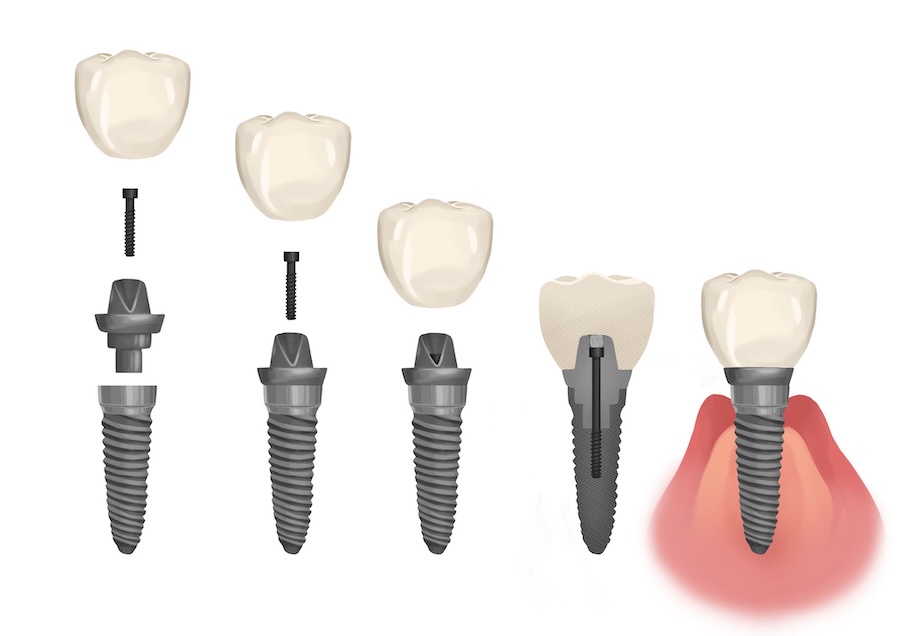
The implant is the part placed in the bone, but that is not the part you will see when you smile. Depending on the situation, the implant may support a single crown, a bridge, a removable denture, or a fixed full-arch restoration. If your treatment plan lists several implant components without showing you what the finished teeth will be, ask to see how those pieces come together.
The cleaning routine can also change depending on the restoration. A single implant crown is cleaned much like a natural tooth, while an implant bridge may require floss threaders or small brushes underneath it. Larger restorations may have additional areas that need careful cleaning every day.
Dr. Kim can explain whether the final teeth stay in place or come out, how you would clean around them, and what maintenance may be needed over time. Those details will still be part of your routine long after the surgical appointments are finished. It is much better to know what daily care looks like before the implant goes in.
Make Sure the Timeline Makes Sense to You
Implant treatment often involves more waiting than people expect. An extraction may need time to heal, grafted bone may need time to mature, and the implant itself may need a healing period before the final crown or bridge is attached. If several of those steps are included, treatment may stretch across a number of months.
However, not every implant plan follows the same schedule. Some procedures can sometimes be combined, while others need to stay separate because the area needs time to heal first. Dr. Kim can review the sequence you were given and explain where those waiting periods come from.
If you have travel, work obligations, or a big event coming up, let us know. Maybe you are trying to avoid surgery right before a flight, or you want to know what temporary tooth you would have for a wedding. Those practical details are much easier to work through before treatment begins.
Make Sure You Know What the Estimate Includes
Implant estimates can vary quite a bit, and sometimes the difference is in what has been bundled into the total. One plan may include the extraction, grafting, imaging, implant, abutment, and final crown, while another may list those pieces separately. Two numbers can look very different until you see what is actually included in each one.
So, when comparing plans, ask whether the final restoration is included and whether grafting has already been factored in. You can also ask about temporary teeth, follow-up visits, and any parts of treatment that may be added later. That gives you a much clearer picture of the full cost from beginning to end.
Dr. Kim can go through the estimate with you and explain where his recommendation differs, if it does. Cost is naturally part of the decision, but it is easier to compare once you know you are looking at the same pieces. Otherwise, a lower estimate may simply be leaving something out until a later stage.
Your Health History Can Affect Implant Treatment
Implant treatment involves surgery and healing, so Dr. Kim will want to know about your health as well as your teeth. Certain medical conditions, medications, nicotine use, and a history of gum disease can affect healing or long-term implant support. Even something that seems unrelated to the missing tooth may still need to be considered before surgery.
Your dental history can offer clues too. Maybe the tooth was lost after a long infection, the area has been missing for years, or you have had gum problems around nearby teeth. Those details can help explain why grafting, additional treatment, or a particular implant position was recommended.
Bring an updated medication list and let us know about any recent changes in your health. If the original plan was made months ago, Dr. Kim may want to account for anything that has changed since then. That can be especially important when surgery is involved.
Grinding or Clenching Can Affect the Implant Crown or Bridge
If you grind or clench your teeth, tell us during the second-opinion visit. The implant itself may be strong, but the crown or bridge attached to it still has to handle the force of your bite. Heavy pressure at night can be rough on natural teeth and implant restorations alike.
You may already have signs of it without thinking much about them. Flattened teeth, chipped fillings, repeated fractures, or a jaw that feels tired in the morning can all point toward extra bite pressure. If you already own a nightguard, mention that too.
Once an implant crown or bridge changes the shape of the bite, an older nightguard may no longer fit correctly. In that case, a new guard may be needed after the final restoration is finished. It is better to know that ahead of time than discover it when the old one refuses to seat properly.
Sometimes the Second Opinion Confirms the First Plan
A second opinion does not have to produce a different answer to be worthwhile. Dr. Kim may review the imaging, examine the area, and agree that the proposed grafting, number of implants, or sequence is appropriate. If that happens, you will still leave knowing another dentist looked at the same area and came to a similar conclusion.
You may also hear the explanation in a way that clicks better the second time. Maybe the first visit moved quickly, or you were still thinking about the cost when the dentist started discussing grafting and healing. Going through the plan again can fill in the parts that were still fuzzy afterward.
If Dr. Kim does see another reasonable option, he can explain how it differs. Then you can compare surgery, healing time, maintenance, cost, and the type of final restoration before deciding which direction fits you better. A second opinion should leave you with a clearer understanding of your choices, not just another estimate to sort through.
Bring the Questions That Came Up After You Left
A lot of questions show up after the appointment, usually once the paperwork is sitting on the kitchen counter and you have had time to look at it again. Maybe you never asked whether the graft was required, how long you would wear a temporary tooth, or why two implants were recommended instead of one. Write those questions down and bring them with you.
You can also ask Dr. Kim to show you the area on the X-ray or scan. Seeing the amount of bone, the nearby tooth roots, or the space available for the restoration can make the explanation much easier to follow. Sometimes one image clears up what several minutes of dental terminology did not.
And if you do not recognize a term on the estimate, ask about that too. Implant plans can include several components that sound very similar if you do not work in dentistry every day. We can explain what each one is and where it fits into the treatment.
Dental Implant Second Opinions at Kapolei Smiles Dental
If you have an implant plan sitting at home and you keep looking at it without feeling ready to schedule, bring it to Kapolei Smiles Dental in Kapolei, HI. Dr. Ji Kim can review the recommendation, examine the area, and look at the imaging needed to understand what is happening beneath the gums. He can then explain whether he agrees with the plan or whether another approach may be available.
Tell us what made you hesitate. Maybe it was the graft, the number of implants, the length of treatment, the cost, or one part of the recommendation that still does not quite add up in your mind. Starting there gives Dr. Kim a clear place to focus the visit.
If you would like another set of eyes on your dental implant plan, schedule a second-opinion visit with Kapolei Smiles Dental. We can go through the recommendation with you, answer the questions that came up after your first visit, and explain what Dr. Kim sees before you decide what to do next. We’d be happy to welcome you in and help you feel more comfortable with the plan you choose!
Contact UsImage from Authority Dental under CC 2.0
Categorised in: Dental Implants, Second Opinion